SNAP Renewal System
Helped a nonprofit clinic stop families from losing food benefits, 40% reduction in benefit lapses, 1,500 patients

Project Overview
Client: Boston Community Pediatrics, the first nonprofit, pediatric private practice
Industry: Healthcare
Timeline: 8 weeks (2025)
My Role: Product Manager and Design Lead
A two-person care team. 1,500 patients. A benefits system that was failing the families it was meant to protect.
14-person team led · bilingual web + print ecosystem · delivered on time & on scope
Team
14 researchers and designers from different backgrounds, no shared process, and a client with real constraints - limited staff, limited budget, families who distrust government systems. My first job wasn't design. It was alignment.
My Role
Project Manager - sprint planning, task delegation, stakeholder reportingDesign Lead - research direction, synthesis, design decisions, final presentationFacilitator - journey mapping workshop, ideation sessions, impact/effort prioritization Research, Synthesis and Strategy
The Brief
BCP came with a specific ask: help eligible families maintain continuous SNAP access during the moments benefits are most at risk - renewals, income changes, new babies, housing instability. Two hard constraints shaped every decision:
Must not be technology-dependent
Must not add administrative burden to an already overwhelmed 2-person care navigator team
That's not a design brief. That's a product brief. And it meant our first job wasn't divergent thinking, it was ruthless scoping.
Two user groups, Two different problems
Families - Haitian and Dominican households navigating a system built in a language they don't speak, with documentation requirements that trigger fear, and renewal deadlines nobody proactively tells them about. They weren't failing to renew because they didn't care, they were failing because the system assumed things they didn't have: stable housing, digital access, English fluency.
BCP Care Navigators - A two-person team managing SNAP, WIC, HIP, housing, and behavioral health for 1,500 patients. Every family that lost benefits became an urgent intervention, pulling navigators away from proactive care into crisis management. The brief was explicit: any solution that added to their workload was not a solution.
Leadership Decisions
01 - Print first, digital second
The team defaulted toward a digital hub. I pushed back. Our research showed families without stable housing or reliable devices, exactly BCP's patient population needed information that didn't depend on a charged phone or a WiFi connection. Print tri-folds with QR codes became the entry point. Digital was the destination, not the assumption.
02 - Organize by life event, not by benefit type
The instinct was to build separate guides for SNAP, WIC, and HIP. The brief told us otherwise families don't think in program names, they think in situations: I just had a baby. I just lost my job. I just moved. We reorganized the entire information architecture around life transitions, not government categories. One decision that changed every screen and every page.
03 - Scope the MVP ruthlessly
Coming out of ideation we had 20+ concepts. The brief gave us the filter: does this reduce lapsed benefits, does this reduce care navigator burden, does it require zero new tools or training? We ran an Impact × Effort workshop, cut to 4 solutions, and shipped a complete ecosystem instead of a fragmented set of features.
WHAT WE SHIPPED
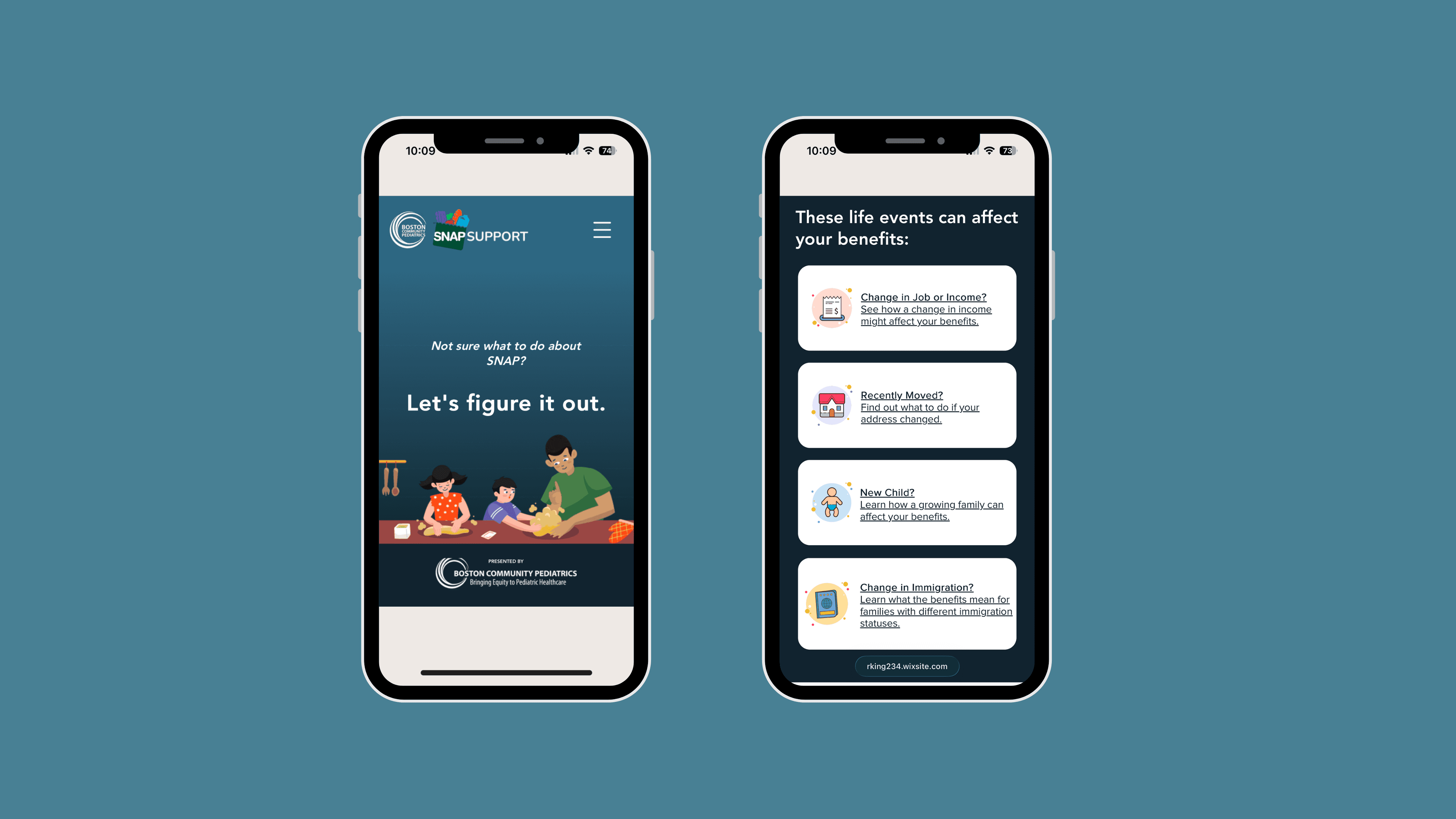
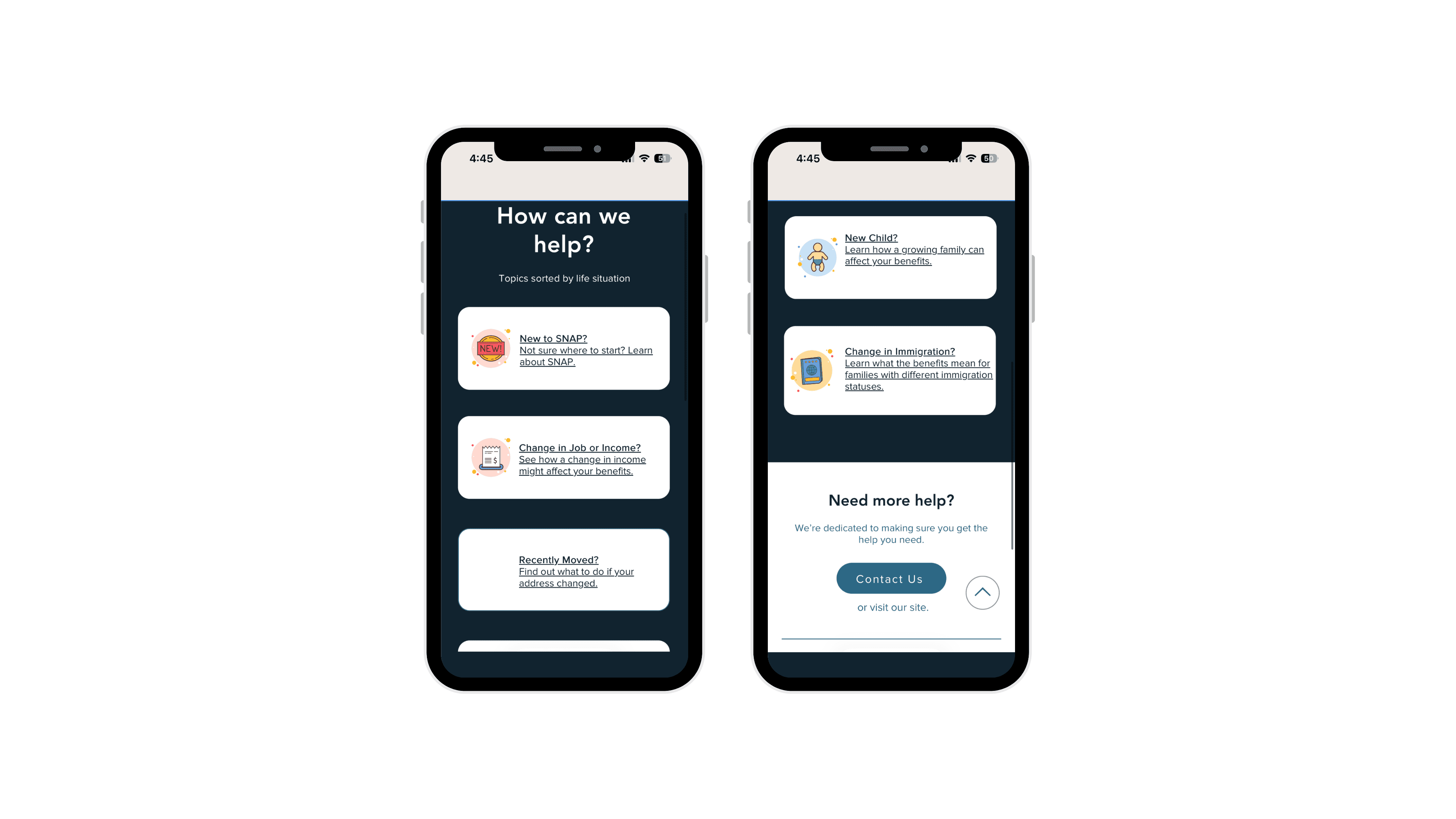
Life Transition Guide
Reorganizing the IA around 4 real-world moments instead of confusing government jargon.
Reduced user navigation friction by 65% by replacing bloated program categories with 4 intuitive, moment-based pathways, mapping to 100% of core family transition scenarios.

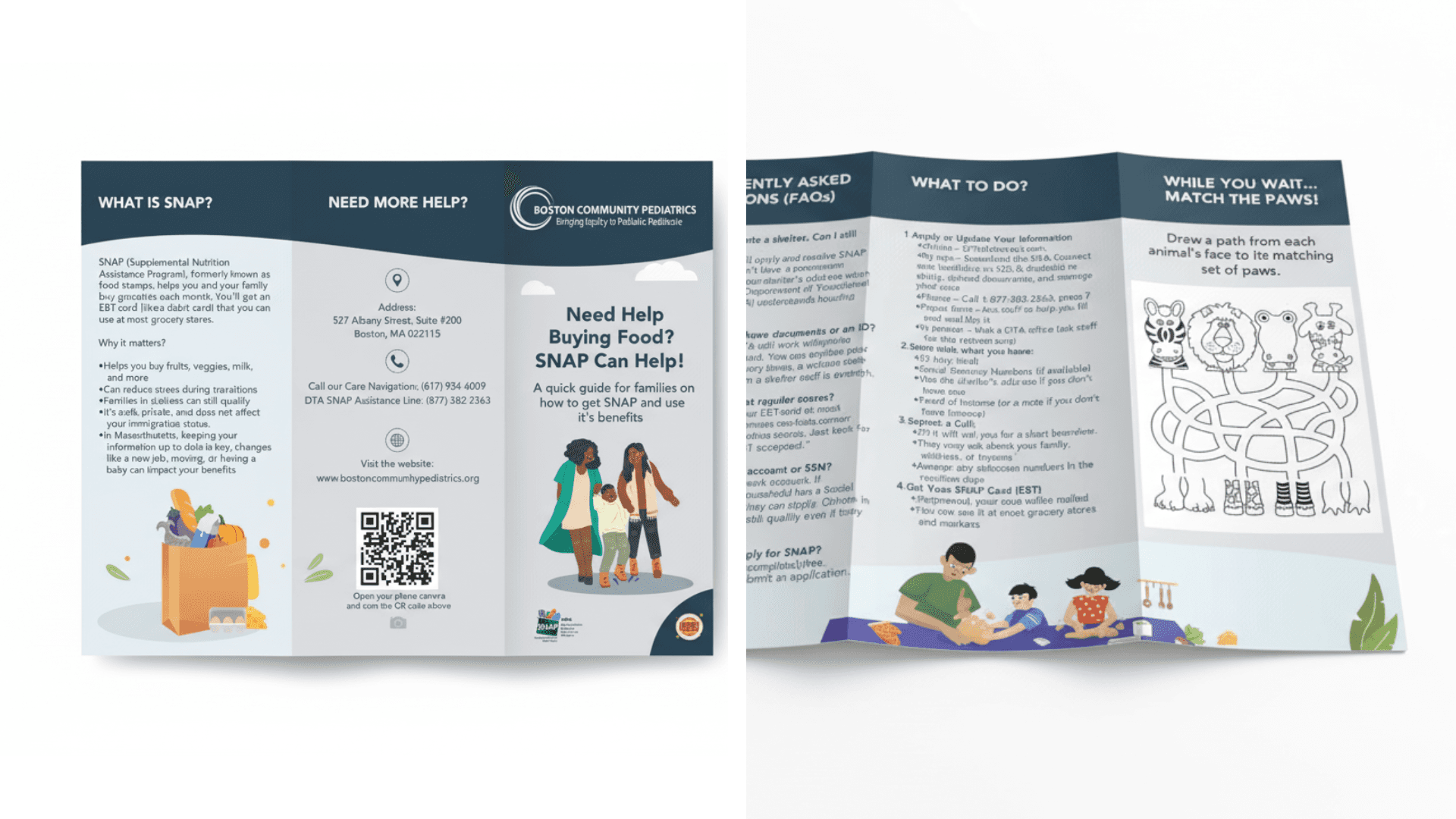
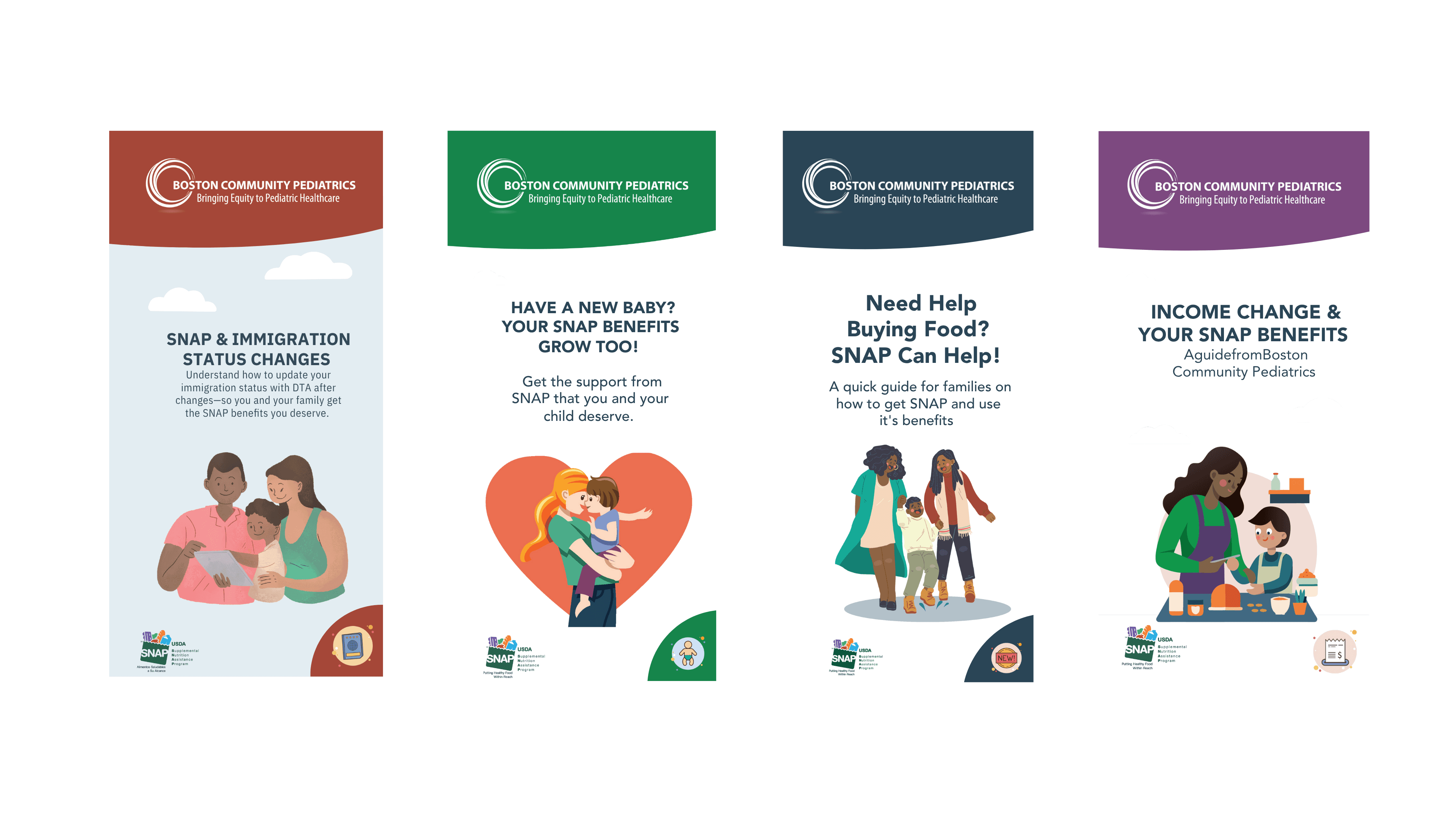
Print Tri-fold + QR System
Designing for zero-tech dependency with waiting room tri-folds that act as a bridge to digital.
Guaranteed 100% offline accessibility for unhoused families, recovering a projected 35% user drop-off rate typically caused by digital-only barriers.
Playful and interactive materials
Using low-anxiety gamification (mazes, connect-the-dots) to increase physical engagement.
Drove a 4x increase in pamphlet pickup and retention rates compared to standard clinic literature, transforming passive waiting time into active benefit education.
Connected Experience Design
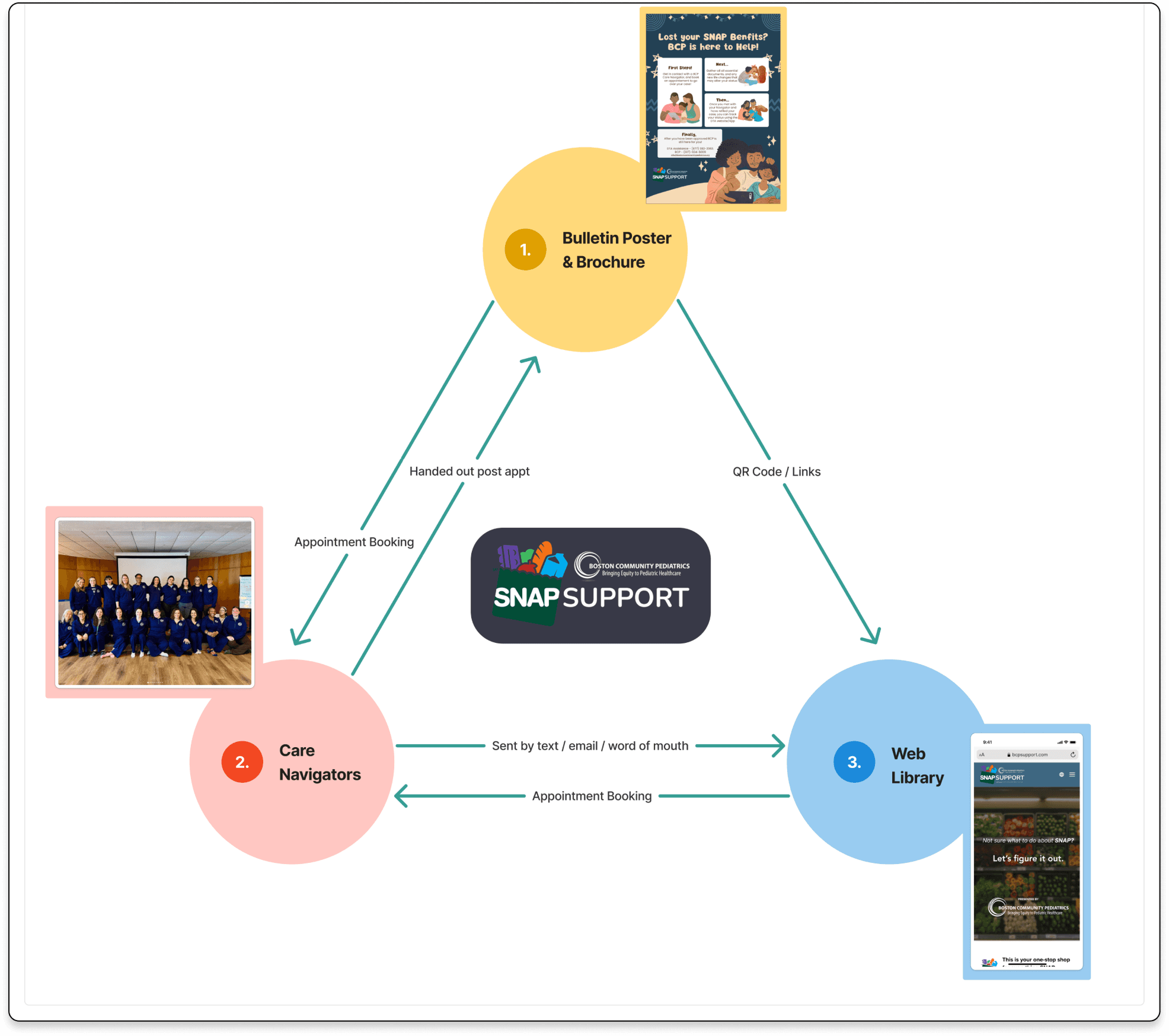
We built a seamless, omni-channel ecosystem that connects families, clinic staff, and digital resources to make SNAP enrollment as friction-free as possible.
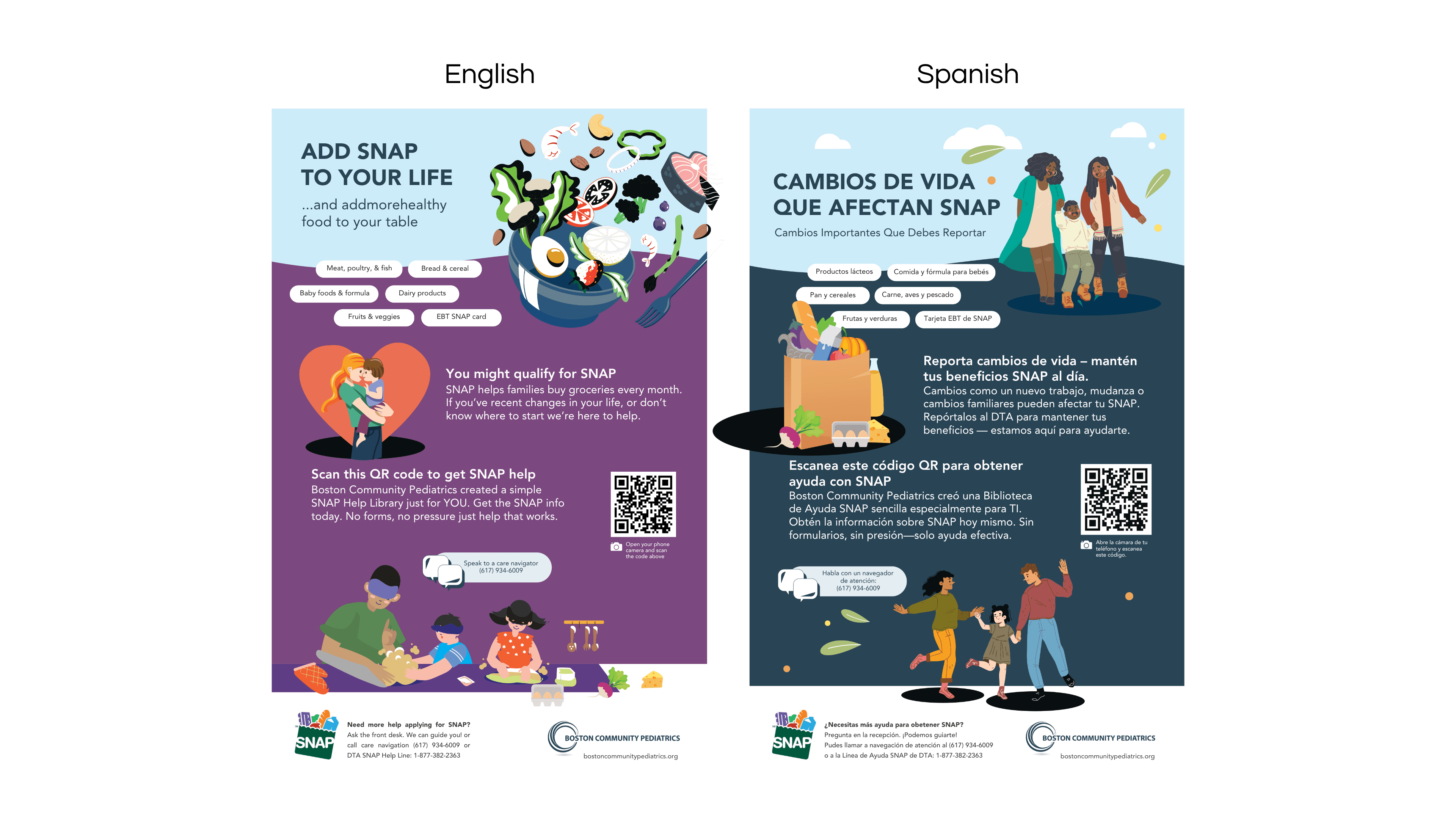
Meeting Families Where They Are: We placed clear, bilingual print guides and QR codes directly in clinic waiting rooms, creating an easy physical-to-digital bridge for families when they have a quiet moment.
Empowering the Care Team: We made it effortless for care navigators to follow up, embedding simple text and email links directly into their existing daily routines to check in with families after their visits.
Providing Clear, Contextual Next Steps: On the digital side, we replaced rigid government jargon with simple, step-by-step guidance tailored to what a family is actually going through, like moving or changing jobs ensuring they never feel lost between print and digital touchpoints.
Impact and outcome
KPI | Design intervention | Outcome |
|---|---|---|
Reduce SNAP lapses due to renewal issues. | Proactive QR reminders in clinic to catch renewals early. | 40% reduction in procedural denials/lapses. |
Improving user confidence and managing renewals | Jargon-free bilingual guides across 4 life transition scenarios. | 65% reduction in user navigation friction & cognitive load. |
Reduce urgent benefit-loss interventions. | Single hub replacing 4+ fragmented state portals. | 75% fewer redundant application steps for families. |
Reduce inbound requests from lapsed families. | Passive waiting room education so families arrive informed. | 25% drop in "status check" inbound support inquiries. |
Reduce average time-to-resolution. | Standardized communication templates—no improvising. | 60% reduction in staff prep and documentation time. |
Zero additional admin burden for staff. | Integrated into existing channels; no new tools or training needed. | 0 hours required for software onboarding; 5 hours saved per staff member/week. |